
NEW BUSINESS MODEL
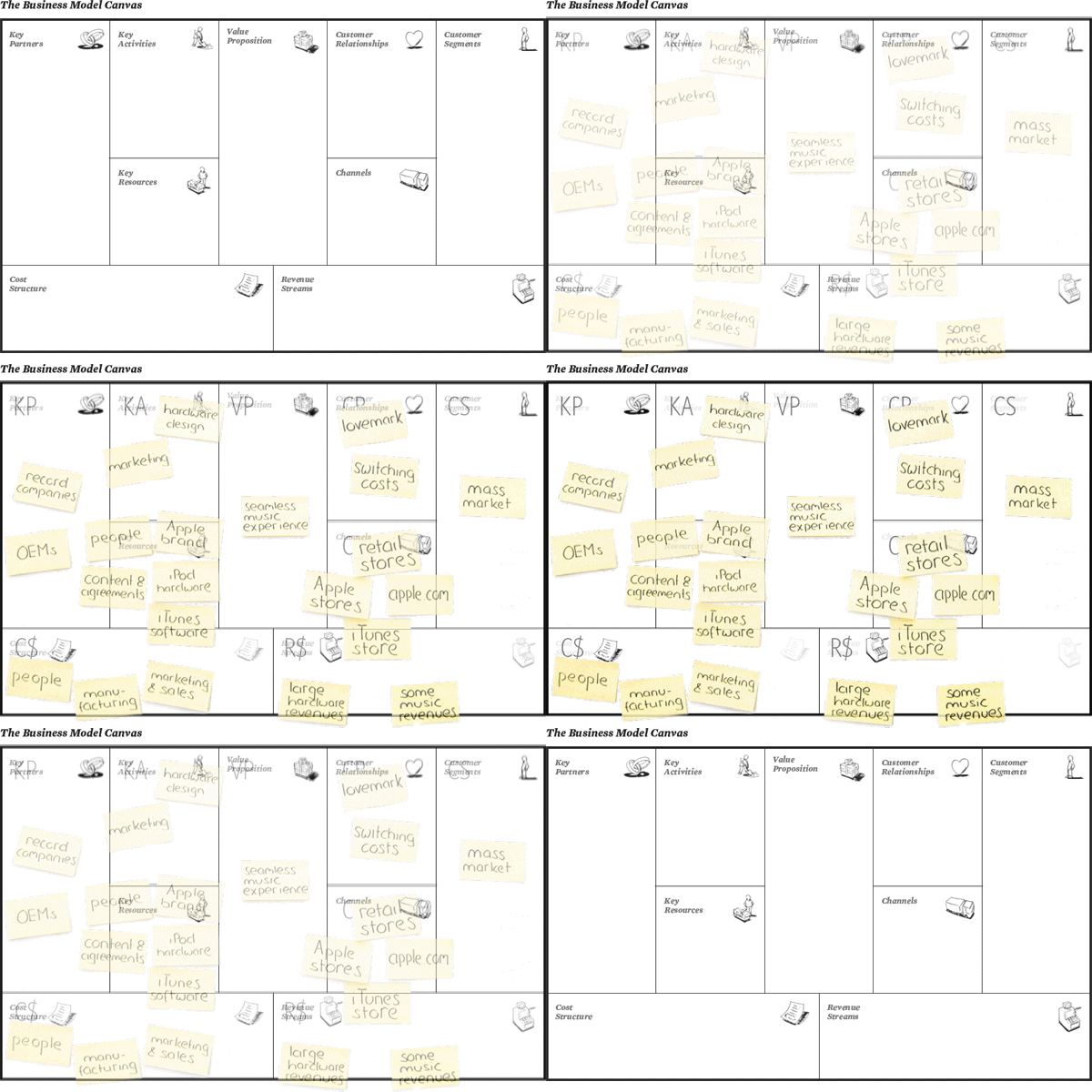
Sao Paulo, Brazil. An Insurance carrier had recently acquired an Assistance Services company. With the new capabilities now within the group, and key stakeholders eager to deeply explore it, I was proposed the following…
The Challenge
How to obtain adjacent revenues through an innovative B2C business model, in a company that only operated B2B?
“Our competitors are doing that, we should just go ahead and do that too!”
“We have tried that a few times already, and never really sold anything, good luck”
Those were some strong verbatim of what I heard from different stakeholders, which, as a designer, really got me curious and excited to dig deep into that universe and find unseen opportunities to be tackled.
01. The Discovery
A great illustration that represents the beginning of a design project is The Design Squiggle
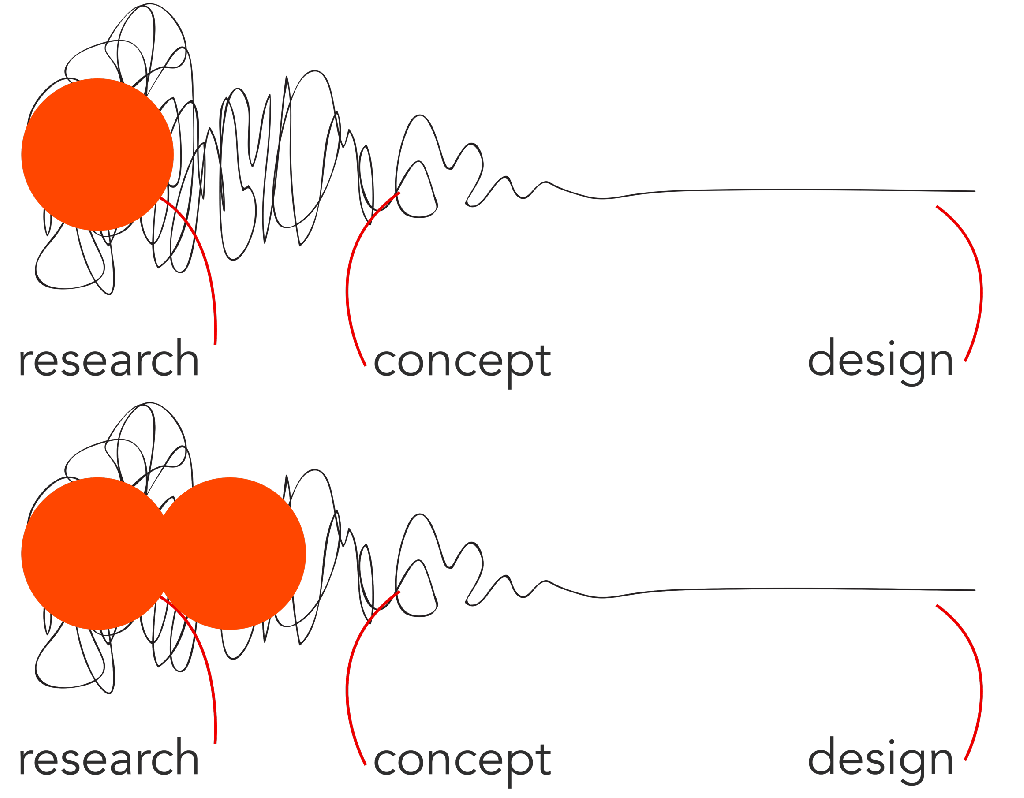
Chaotic and messy, intense amount of noisy data that can be considered, but still no clear sight of what the future – or the answer will look like.
This moment of ambiguity and uncertainty often brings feelings of rush and anxiety for more formal teams, used to traditional projects where everything could be scoped and executed according to the initial perfect plan – you know, Industrial Revolution age.
In order to provide myself with the greatest amount of information possible, and to develop a rich understanding of the context surrounding my challenge, one truly useful tool applied on this project was the Time Machine – presented in The Service Startup book – it supports the development of a strong and holistic discovery phase, which structures the thought for opening the Double Diamond.
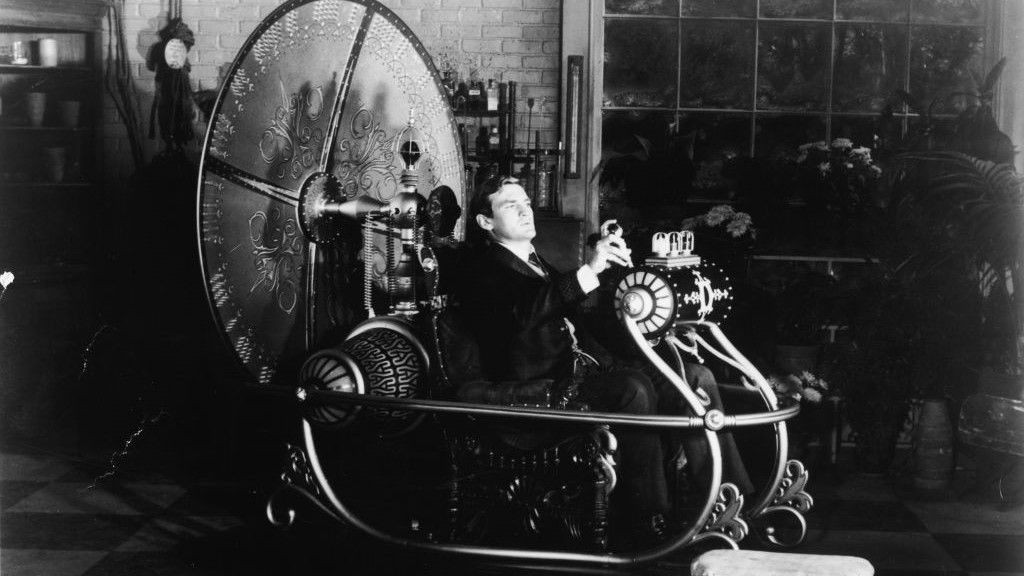
Shall we go on a time travel?
The Time Machine invites you to consider, thus to research about, how the job to be done – in this specific project to have access to assistance services – a. used to be done in the past (learnings), b. is being done currently (competitors scene) and c. might be done in the future (trends).
This exercise really helps to broaden the understanding of the challenge, and, mostly, boosts the inspiration to, afterwards, narrow and define your scope.
Take a step back and a good look around, below and above.
Design research is about intentionally questioning and overcoming your biases, so you avoid the trap of designing within your bubble and being far away from what’s actually valuable for your user and various stakeholders.
In order to analyze what was done the past, I partnered with the associates of the company to dig into all the previous retail tentatives that had happened, and together with them, brought to knowledge the investment and sales, as well as their marketing strategy. In parallel, I brought news from those same years to have a clearer view of the zeitgeist and start to look for patterns regarding what might have gone wrong.
To observe the present, I conducted a traditional desk research to map direct competitors and adjacent value propositions available in the national and international market, with various business models (b2c, b2b2c, c2c), also looking for the spaces not yet inhabited, mostly in terms of audience, product, channel and communication strategy.
Last but not least, to take an educated look and the future, I used the PESTEL (acronym for Politic, Economy, Social, Environment and Tech) tool to help structure the different ecosystems of trends. Three of them stood out and felt pertinent to shape the momentum:
Economic
GIG Economy
“…it works as a suction pump for the 12.2 million unemployed, and 40.8% of informal workers that exist in Brazil…” – B9, April 2019.
Social
Dehumanization of work
“OAB classifies the death of Rappi’s delivery man as dismantling labor relations” – Folha, July 2019.
Tech
New Payment Methods
Brazil has 150 million internet users – IBGE, 2019
60% of the population still uses cash to pay bills – Bacen, 2018
PEC Flash® is a cash payment method created for e-commerce
These three trends combined, outlined a scenario of an exponentially growing unprotected population, who was increasing their exposure to different sources of risk, while also being financially included.
Designer Note: we always have an option regarding where we will put our lenses at. You can look for dust underneath the carpet, or can add new chic furniture on top of it. I personally choose the one that contributes to a more equitable world.
2. Definition
Key Learnings to guide Next Steps
Synthesizing all the learnings from the discovery requires a good sight to find patterns that are strong enough to orient the Define phase. This is a tricky exercise because patterns don’t come in similar color and size. Behavioral patterns require ability to abstract what’s being shown, and extract the essence of what’s causing it – this is where the great patterns exist, and that’s not a right or wrong answer, that’s an educated choice.
Outlined Audience
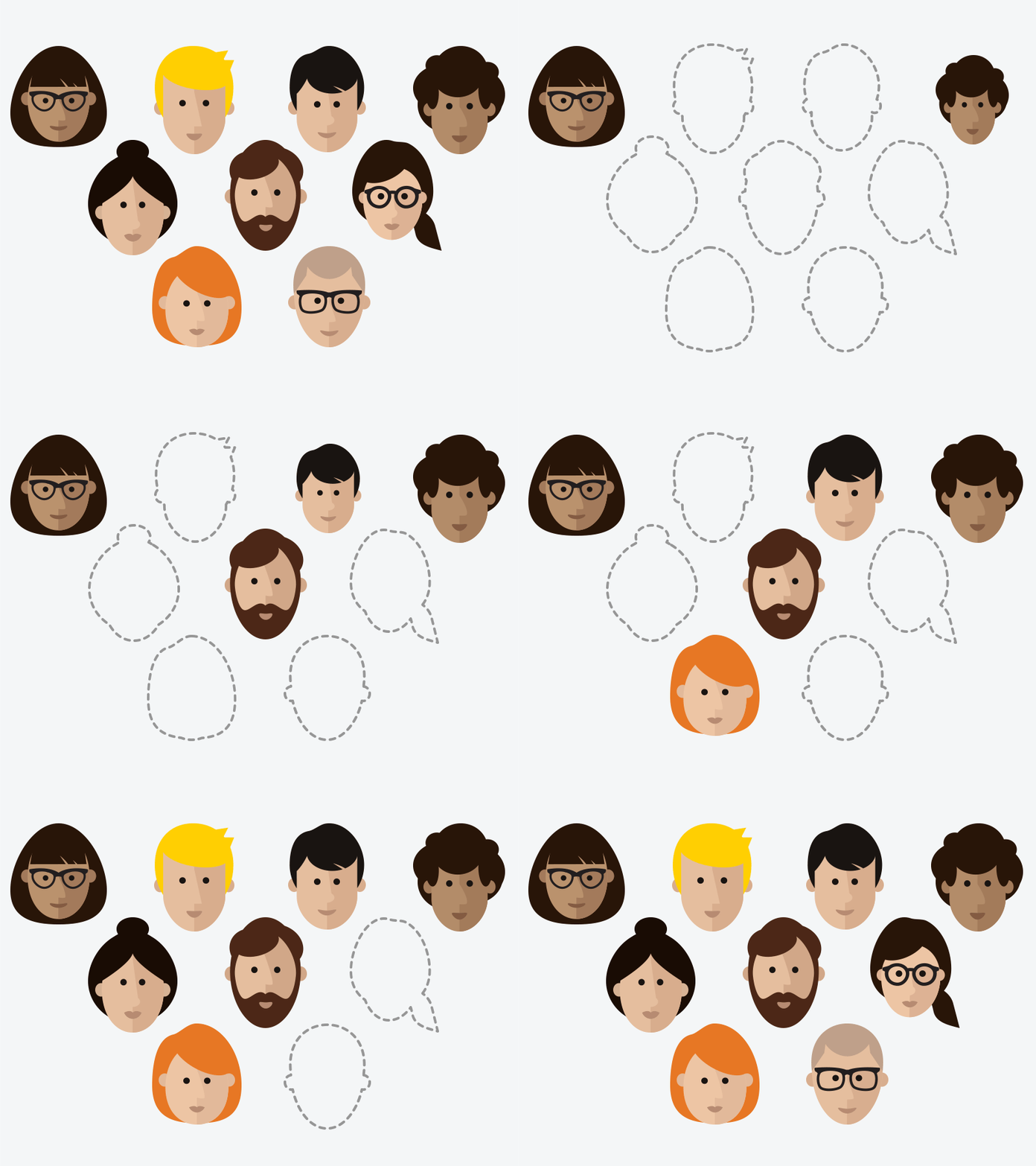
Emerging from the deep dive in the context, one key learning was that initial attempts to address the same opportunity had lacked a clear outlined audience, offering a generic product in the past, with weak value proposition.
Channel with Awareness
Also, having in mind the missing purchase trigger in previous B2C initiatives, both off and online, this project had to guarantee that the new business model was built into a channel with high awareness – even without high ad budget
After analyzing and synthesizing the lessons learned from the Discovery phase, these two main learnings emerged, and served as guidance for the idea generation stage.
In addition to the learnings, the budget restriction and the need to generate a competitive differential among the market players corroborated the upcoming proposal
3. Design
This is where the fun starts! Once I found the patterns, and synthesized the key learnings, it’s to to ideate possible design solutions to address the newly reframed challenge, which, by them, it was:
How might we be accessed by an uninsured population with low income to offer simple and desirable assistance services, anywhere and anytime?
At this point in the project, it’s time to feed those blurry ideas that had started to pop during Discovery phase, but is just wasn’t the right timing.
… you curious to know how this ends?
 Lívia Fabrin Pereira